Legislative Advocacy for Protection
In 2013, the Women’s Bar Association of Massachusetts (WBA) began a legislative initiative that would take seven years to pass and to protect children from FGM/C in Massachusetts. Throughout the years, an informal coalition, including survivors and other advocates from different sectors, came together to prepare for hearings, enlarge public and community support for proposed bills addressing FGM/C, and engage in advocacy inside and outside the Massachusetts State House.
Building Momentum for Change
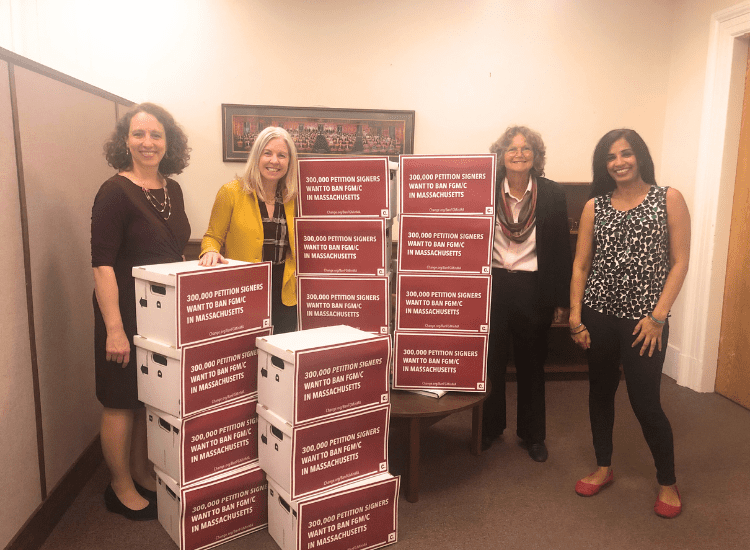
In 2018, Sahiyo Co-Founder Mariya Taher created a Change.org petition that received over 400,000 signatures advocating for legislation addressing FGM/C.
In 2019, the The U.S. End FGM/C Network, Muslim American Leadership Alliance (MALA), Tostan, MassNOW, Lesley University, and the Women’s Bar Association of Massachusetts co-sponsored a Roundtable on FGM/C in Massachusetts. During this event, a collective of almost 60 experts from different disciplines and cultural groups took the first steps to create a ‘Massachusetts End FGM/C Network,’ created to highlight the largely unrecognized global issue of FGM/C and toshare knowledge and resources to help address and support survivors of FGM/C and work towards the prevention of the harmful practice amongst future generations of children in the state.
Bringing Diverse Experts Together
The experts gathered included community leaders, civic society organizations, health professionals, state government officials from the Massachusetts Legislature, the Massachusetts Office of the Child Advocate, and federal government officials from the Department of Justice and the Department of Homeland Security Investigations.
Massachusetts Passes Historic FGM/C Legislation in 2020
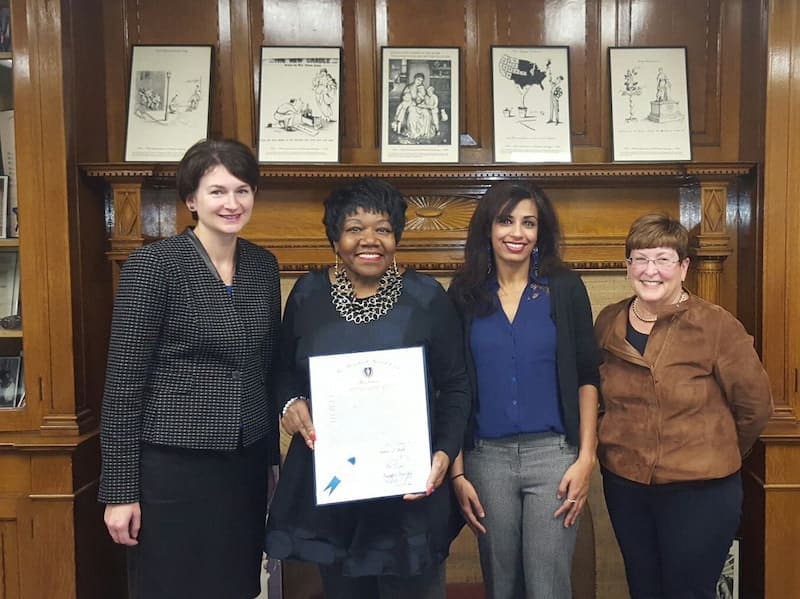
Yet, still passage of the FGM/C bills faced many difficult setbacks: legislators were not familiar with FGM/C, advocacy to advance the various bills often became political, and, of course, the pandemic consumed the world. Finally, on August 6, 2020, following seven years of advocacy, Massachusetts Governor Charlie Baker signed Bill H4606, “An Act Relative to the Penalties for the Crime of Female Genital Mutilation,” into law, making Massachusetts the 39th state to pass a law prohibiting FGM/C in the United States. The law went into effect 90 days later, on November 6, 2020.