Bridging the Gap: Addressing Female Genital Mutilation/Cutting in Massachusettes – Results from Our Community Health Needs Assessment Survey
Posted On: 03-24-26
As part of Holistic Organized Partnerships to End FGM/C in Massachusetts’ (HOPE MA) ongoing effort to understand the current landscape of FGM/Cs, we developed a needs assessment survey to gather input directly from organizations and individuals working in this space. The survey draws on multiple data sources to identify gaps, emerging needs, and opportunities that will inform and strengthen our work in the years ahead.
The assessment was conducted from April 2025 through early 2026 using three key data sources: survey responses, educational training data, and stakeholder meetings — We gathered over 30 survey responses, reached over 115 training participants, and conducted 30 stakeholder meetings. Overall, the findings highlight both a clear need and a meaningful opportunity for action across the state. While individuals and organizations demonstrate “strong interest, commitment, and willingness” to engage, the findings consistently showed that baseline knowledge, localized awareness, and organizational preparedness remain significantly limited.
The needs assessment revealed a striking contrast in awareness levels among respondents. Overall, participants reported a high level of general knowledge about FGM/C, understanding that FGM/C results in severe, multifaceted consequences impacting physical, mental, sexual, and emotional health. However, significant gaps in knowledge and implementation still remain.
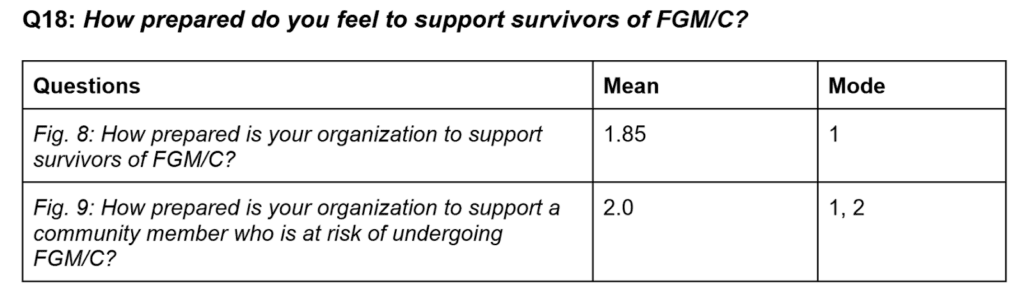
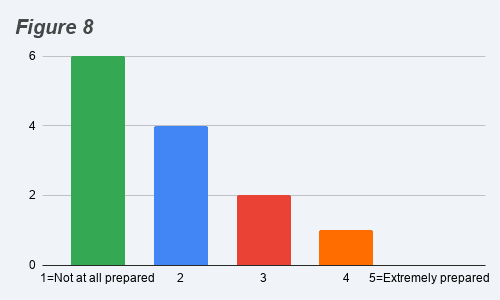
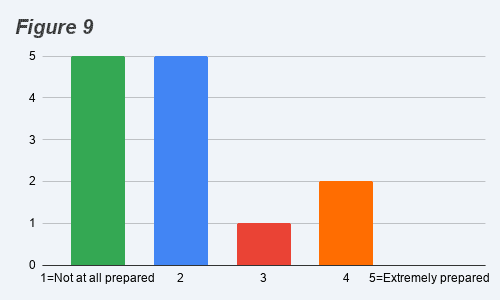
- Organizational preparedness to support survivors and those at risk of undergoing FGM/C averaged only 1.85 and 2 out of 5, respectively.
- 69% of respondents reported that their organizations are not currently supporting survivors.
- Awareness of Massachusetts-specific policies and local prevalence was also low, with awareness scores averaging below 3 out of 5.
- Respondents identified clear solutions:
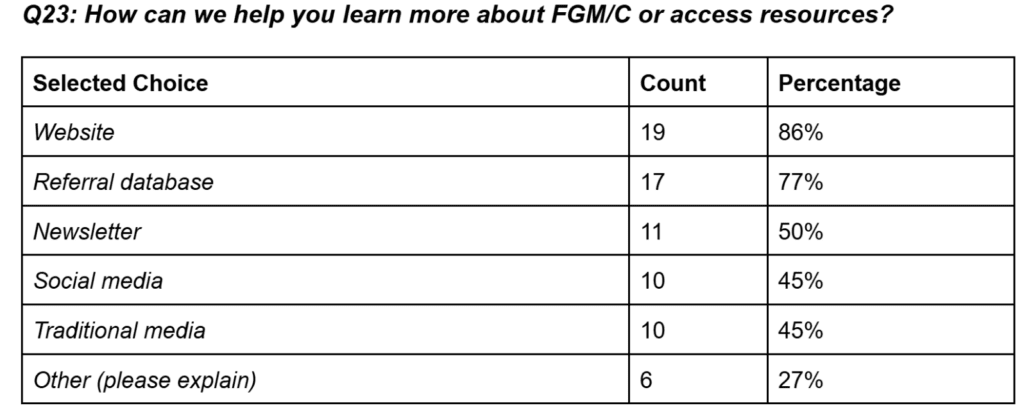
The Needs Assessment findings make clear that while strong interest exists across sectors, education and capacity building are a vital first step in supporting FGM/C survivors and prevention efforts in the state of Massachusetts, as providers need foundational knowledge, skills, and coordinated systems to respond effectively
Data gathered from the stakeholder meetings reinforced the need to move beyond foundational awareness toward practical application. Participants repeatedly requested concrete guidance, formal curricula, lesson plans, and scripts tailored for different professional and age-specific settings, particularly in sex education and youth services. The following priorities for future work were identified:
- Trust and Community Engagement: Effective prevention must be community-led, built on trust, and utilize safe, familiar channels like community health workers, doulas, and small, intimate gatherings.
- Geographic Priority: Efforts have historically concentrated in Boston, leaving Central Massachusetts, particularly Worcester, with growing needs and fewer resources, making it a priority for new hubs and partnerships.
- Fragmented Systems: There is a pronounced lack of coordination and clear referral pathways across healthcare, education, social services, and community organizations. Stakeholders expressed strong interest in building a more coordinated, statewide system of care rather than introducing siloed efforts.
This preliminary assessment reinforces that while the will to end FGM/C exists in Massachusetts, sustainable progress depends on formalized, survivor-centered capacity-building, stronger cross-sector collaboration, and accessible resources that empower service providers to translate goodwill into practical, trauma-informed support. The HOPE MA initiative is working toward driving this systems-level change by grounding future programming in ethical engagement and local context.